Technical knowledge
Galvanic corrosion when nickel alloys meet carbon steel
How galvanic corrosion works in a flanged joint, why area ratio matters more than the alloy pair, and the isolation, coating and material measures that prevent the carbon steel from becoming the sacrificial anode.
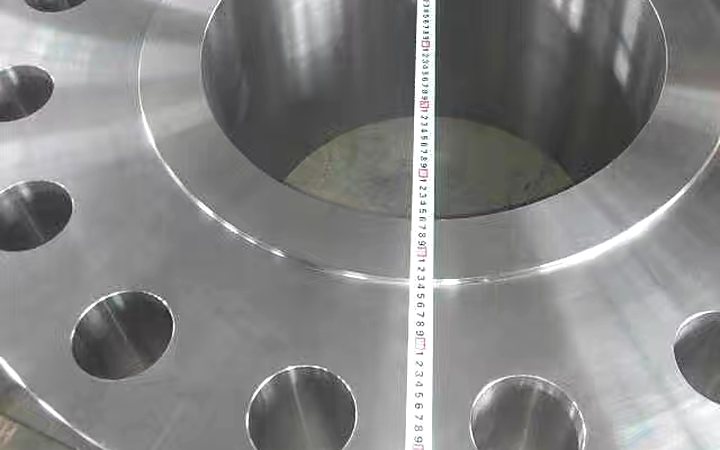
How the cell works in a flanged joint
When two metals with different electrode potentials are connected electrically and both are wetted by a conductive fluid, current flows between them. The less noble metal becomes the anode and corrodes; the more noble metal is protected. Nickel alloys, titanium and stainless are more noble than carbon steel, so in a mixed joint the carbon steel carries the corrosion.
Area ratio: the factor that decides severity
| Arrangement | Severity | Interpretation |
|---|---|---|
| Small steel area, large nickel area | Severe | Corrosion current is concentrated on a small anode |
| Large steel area, small nickel area | Usually tolerable | Current is spread over a large anode |
| Similar areas | Moderate | Assess by environment and consequences |
| Bolts smaller than the flange | Bolts at risk | Classic cause of seized or wasted fasteners |
Tip Look at the joint and ask which component is the small one. That component is where the damage will appear, regardless of which alloy name appears larger on the drawing.
Controls that work
- Insulating gasket kits. Insulating gasket, sleeves and washers break the electrical path through the joint.
- Coating strategy. Coat the more noble surface rather than thesteel alone, since coating only the anode leaves a small defect area carrying all the current.
- Material matching. Where practical, keep the wetted materials in the same galvanic group.
- Sacrificial anodes or cathodic protection where the system already includes them.
- Avoid small steel members such as thin bolting or small bore branches coupled into a large alloy system.
Joint specific notes
Bolting deserves special attention. A set of carbon steel studs in a nickel alloy flange presents a small anodic area inside a large cathodic assembly, so the studs corrode and seize, and the joint loses preload. Specify bolting in a compatible grade, or isolate it. Where carbon steel piping connects to alloy equipment, an insulating kit or a transition piece is normally the most economical long term answer.
Questions about this topic
Is carbon steel to stainless always a problem?
Should I coat the carbon steel to protect it?
Do insulating gasket kits actually work?
Which bolting should I use on a nickel alloy flange?
Questions about our products
What products does Hangbo Alloy supply?
Which alloy grades are available for these products?
What sizes, wall thicknesses and pressure classes can you supply?
Which material and dimensional standards do you work to?
Is there a minimum order quantity?
What inspection and certification is issued with the goods?
What are typical lead times?
How are the products packed for export?
How do I request a quotation or a sample?
Talk to an engineer
Share your duty conditions and we will shortlist candidate alloys within one working day.