Special alloy manufacturer & exporter · Shanghai, China

demi@nickel-alloy.com  |  +86 15618279078  |  WhatsApp

Technical knowledge

How to choose a flange material for corrosive service

A practical five-step method for selecting flange material in corrosive service: identify the fluid, rank the failure modes, shortlist alloys by PREN and temperature, then verify hardness, bolting and certification before ordering.
Published Last updated 9 minute readCategory: Technical knowledge
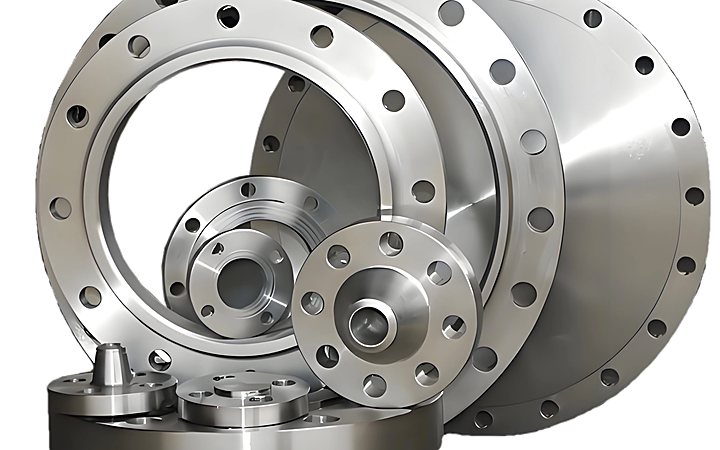
Stack of forged nickel alloy flanges with machined raised faces
Forged alloy flanges ready for material selection review.

Step 1 - Start with the fluid, not the flange

Most wrong alloy choices begin with a specification copied from a previous project rather than with the actual stream analysis. A plant that nominally handles 'seawater' may actually be handling seawater dosed with sodium hypochlorite, contaminated by H2S during shutdown, or stagnant for weeks between batches. Each of those conditions moves the material requirement in a different direction, and the difference between 316L and Inconel 625 is far cheaper than one unplanned shutdown.

Collect the full stream analysis before you shortlist: pH, chloride content, oxidising species such as ferric and cupric ions, H2S partial pressure, operating and upset temperatures, velocity, stagnant periods and any cleaning chemicals. Upset conditions usually control the selection, not normal operation.

Step 2 - Rank the failure modes that actually apply

Different mechanisms demand different answers, and no single alloy solves all of them. Ranking them first prevents both over-specification and nasty surprises.

  • Pitting and crevice corrosion - driven by chlorides plus stagnant geometry. Use PREN as the first filter.
  • Chloride stress corrosion cracking - affects every austenitic stainless steel above roughly 60 °C; duplex and nickel alloys are immune or very resistant.
  • Sulphide stress cracking - requires NACE MR0175 / ISO 15156 compliance and hardness control, not just a corrosion resistant alloy.
  • General corrosion - often decides between reducing acids, where molybdenum matters, and oxidising acids, where chromium matters.
  • Erosion corrosion - high velocity or entrained solids demand hardness and a strong passive film, pointing to duplex or titanium.

Step 3 - Shortlist alloys using PREN and temperature

Pitting resistance equivalent number (PREN = %Cr + 3.3 x %Mo + 16 x %N) is a fast screening tool, not a design method, but it sorts candidates efficiently. Read it together with the maximum metal temperature because several high PREN alloys lose toughness or crevice resistance above certain limits.

Common flange materials screened by PREN and temperature capability
MaterialTypical PRENApproximate limit in seawaterTypical role
316LAbout 26Atmospheric, low chlorideLowest cost, general service
Duplex 220535 - 38Immersed seawater, to about 30 °CHigh strength seawater systems
Super duplex 2507Above 40Hot brine, high velocitySubsea, desalination, HP injection
254SMO (S31254)Above 43Seawater heat exchangersSingle phase alternative to duplex
Incoloy 82530 - 33Sulphuric acid dutyAcid and sour produced water
Inconel 62545 - 51Hot seawater, sour serviceOffshore, FGD, wellhead
Hastelloy C-276Above 65Mixed acid dutyChemical reactors, scrubbers
Titanium Grade 2Not applicableUnlimited practical rangeChlorine, seawater, desalination

Tip Titanium does not use PREN because it does not pit by the same mechanism. Where chlorides dominate and the temperature is below about 80 °C, compare titanium against high nickel alloys on installed cost, not on corrosion data alone.

Step 4 - Match the bolting, gasket and facing to the flange

Specifying a Hastelloy flange with carbon steel studs guarantees galvanic corrosion of the bolts and a seized joint at the next shutdown. Match the whole joint.

  • Bolting. ASTM A193 B8M Class 2 for general stainless duty, ASTM A453 Grade 660 for high temperature, Inconel 718 where relaxation resistance and sour compliance are both needed.
  • Gaskets. Spiral wound with PTFE or graphite filler to ASME B16.20; use BX or RX ring joints only with correctly hardened RTJ grooves.
  • RTJ hardness. The groove must be harder than the ring so the ring deforms, not the flange. Agree the hardness window in the purchase order.
  • Coatings and isolation. Use insulating gasket kits when joining dissimilar metals, particularly nickel alloys to carbon steel.

Step 5 - Specify certification before you buy, not after

The material certificate is the only proof you will ever have of what was actually delivered. State the following in the purchase order so there is nothing to negotiate later:

  1. Material specification and UNS number for flange, bolting and gasket, with dimensional standard (ASME B16.5 or B16.47 series).
  2. EN 10204 3.1 certificate as standard, plus an SGS third party test report when the project needs independent verification.
  3. NDT scope: ultrasonic testing, dye penetrant on machined surfaces, PMI coverage percentage.
  4. Hardness limits, especially for sour service to NACE MR0175 or for ring type joint grooves.
  5. Marking requirement to MSS SP-25 so that the heat number survives to the installed asset.

Hangbo issues all of these as standard documentation and can consolidate flange, bolting and gasket certificates into one package so your audit trail has no gaps.

Questions about this topic

Can I use 316L flanges on a seawater line to save money?
Only for atmospheric exposure or low chloride, low temperature duty. Immersed or warm seawater causes crevice corrosion under the gasket, which is where most failures start. Duplex 2205 usually costs little more once you account for wall thickness reduction from its higher strength.
What is the most common cause of leaking alloy flanges?
Galvanic corrosion or relaxation of the bolting rather than failure of the flange itself. Stainless or carbon steel bolts in a nickel alloy joint corrode preferentially, losing preload and letting the gasket creep out.
What documentation is issued with the material?
Every item ships with an EN 10204 3.1 mill test certificate quoting actual results from the heat lot, which is sufficient for most projects. Where the owner, EPC or regulator requires independent verification we arrange inspection, sampling and laboratory testing by SGS and issue the resulting third party test report with the shipment.
Should I always specify PMI testing?
Positive material identification is inexpensive insurance. Specify 100 % coverage for small quantities and for critical alloy changes, or a statistical programme such as 10 % for large bulk orders of standard grades.
Is Inconel 625 always better than duplex for offshore use?
Not always. Duplex 2205 and 2507 handle clean seawater systems well and cost less, while Inconel 625 wins when there is elemental sulphur, H2S, hypochlorite dosing, high temperature or severe crevice geometry.

Questions about our products

What products does Hangbo Alloy supply?
Four product families, all available in nickel-based alloys, titanium, duplex and special stainless steel: flanges, butt weld pipe fittings, elbows, and seamless tube and pipe. Flanges cover weld neck, long weld neck, slip-on, blind, socket weld, threaded and lap joint patterns. Fittings and elbows cover concentric and eccentric reducers, equal and reducing tees, caps, stub ends, and 45°, 90° and 180° returns in both long and short radius, plus 3D and 5D bends for piggable lines. Seamless tube and pipe is supplied cold drawn or hot finished from 6 mm to 630 mm outside diameter.
Which alloy grades are available for these products?
More than 90 grades are published in our grade library. The most requested are Inconel 625, 718, 600 and X-750, Hastelloy C-276, C-22 and B-2, Monel 400 and K-500, Incoloy 800H, 825 and 925, duplex 2205 and super duplex 2507, 316L, 904L and 254SMO stainless steel, and titanium Grade 2 and Grade 5. Nickel-based grades can also be supplied with VIM plus ESR double melting where cleanliness or fatigue life is critical.
What sizes, wall thicknesses and pressure classes can you supply?
Flanges run from NPS ½ to NPS 24 to ASME B16.5 and from NPS 26 to NPS 60 to ASME B16.47 Series A or B, in pressure classes 150 through 2500. Butt weld fittings and elbows run from NPS ½ to NPS 48 (DN 15 to DN 1200) in wall thickness Schedule 5S through XXS. Seamless tube and pipe covers 6 mm to 630 mm outside diameter, in random lengths of about 5 to 7 metres or fixed lengths up to 12 metres. Non-standard and intermediate sizes are quoted on request.
Which material and dimensional standards do you work to?
Forged flanges to ASTM B564, B381 and A182 with dimensions to ASME B16.5 and ASME B16.47. Butt weld fittings and elbows to ASTM B366 and A403 with dimensions to ASME B16.9 and MSS SP-43. Seamless tube and pipe to ASTM B444, B423, B622, B163, B167, B861, A312, A213 and A790. Marking follows MSS SP-25 and the applicable product standard. If your project is governed by EN, DIN, JIS or a company specification, send the document and we will confirm equivalence before quoting.
Is there a minimum order quantity?
There is no minimum for standard sizes and grades held in stock, and prototypes, spares and small trial batches are accepted. Made-to-order melts and special forgings carry a minimum weight that depends on the alloy and the route, typically from about 500 kg for special grades.
What inspection and certification is issued with the goods?
Every shipment carries an EN 10204 3.1 mill test certificate quoting the actual chemical and mechanical results for the specific heat lot, together with dimensional records and heat treatment data where applicable. Testing is carried out in house by optical emission spectrometry, tensile, impact and hardness testing, plus ultrasonic and eddy current examination, with hydrostatic pressure and intergranular corrosion testing to ASTM G28 or A262 Practice E where the specification requires it. Third party inspection by SGS or another recognised agency can be arranged, and their report is issued alongside the shipment.
What are typical lead times?
Standard stock items ship within days. Common production grades such as Inconel 625 or duplex 2205 are typically a few weeks. Special chemistries, larger forgings and items that require third party inspection take longer and are quoted individually against the requirement.
How are the products packed for export?
Flanges and fittings receive a rust preventive coating, are individually wrapped and are packed in plywood cases secured with steel banding. Tube ends are capped and bundles are strapped. Packing lists quote heat numbers so every case can be cross-checked against the mill certificate on arrival. We quote EXW, FOB, CFR, CIF and DAP, and mixed-alloy orders can be consolidated into one shipment with a single documentation package.
How do I request a quotation or a sample?
Send the grade or UNS number, the dimensions including schedule or wall thickness, the governing material and dimensional standards, quantity, any heat treatment or NDT scope and the certificate type you need; a drawing is ideal for special flanges and fittings. Email demi@nickel-alloy.com or message us on WhatsApp +86 15618279078 and we normally issue a formal quotation within 24 hours on working days. Samples and previous test reports can be arranged before the first order.

Written by Hangbo Alloy Technical Team

Metallurgy & materials engineering. Reviewed against the latest ASTM, ASME and AMS specifications held on file at Hangbo Alloy. Last updated 2026-09-18.

Questions on this specification? Email demi@nickel-alloy.com or WhatsApp +86 15618279078.

Continue reading

Ready to specify your alloy?

Send us your drawing, material specification and quantity. You receive a formal quotation within 24 hours, including melting route, heat treatment, testing scope and certificate format.