Technical knowledge
Machining and welding Inconel 625 flanges: shop practice that works
Practical shop guidance for Inconel 625: tooling, cutting speeds, work hardening control, weld procedure essentials, filler selection and how to avoid the defects that cause rework.
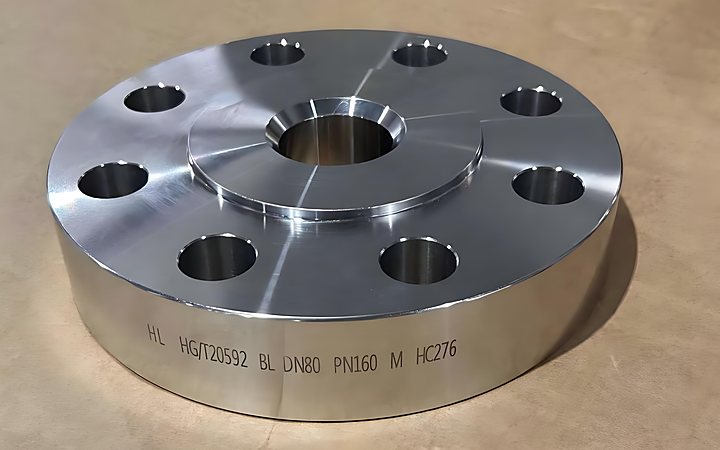
Machining: keep the cut engaged
625 work hardens rapidly and has poor thermal conductivity, so heat stays in the chip and the surface layer hardens. A light pass over an already hardened skin quickly destroys tool life.
- Depth of cut. Keep the feed and depth high enough to cut below the previously work hardened layer rather than rubbing over it.
- Tool geometry. Positive rake, sharp edges, rigid setup. Replace inserts on a scheduled basis rather than on failure.
- Coolant. High pressure coolant improves chip breaking and reduces surface hardening on the sealing face.
- Speeds. Run slower than for stainless steel and accept a lower metal removal rate; forcing the rate is the usual cause of a ruined flange face.
Welding: the five things that decide quality
- Cleanliness. Remove all paint, oil, marking crayon and embedded iron. Use dedicated stainless wire brushes and separate grinding wheels for nickel alloys.
- Filler metal. ERNiCrMo-3 for gas tungsten and metal inert gas welding, ENiCrMo-3 for covered electrodes.
- Shielding. Use argon backing plus trailing shields. Straw or blue oxide on the root indicates inadequate shielding and must be removed and rewelded.
- Heat input. Moderate heat input with an interpass temperature below about 150 C limits grain growth and distortion.
- Distortion control. Balance the weld sequence on flanges so the sealing face stays flat within ASME B16.5 facing tolerances.
Defects, causes and fixes
| Defect | Typical cause | Corrective action |
|---|---|---|
| Root oxidation or sugaring | No backing gas | Purge with argon, verify oxygen content, remove and reweld |
| Lack of fusion | Heat input too low, poor bevel | Increase heat input, open the included angle, improve access |
| Solidification cracking | High restraint, contamination by sulphur or lead | Improve cleanliness, adjust bead shape, reduce restraint |
| Poor tool life | Light finishing cuts on worked skin | Increase depth of cut, sharpen or replace inserts |
| Iron contamination | Shared tooling with carbon steel | Dedicated tools, pickling or passivation, ferroxyl test |
Verification before release
Confirm dye penetrant examination on all machined sealing surfaces, positive material identification on the required percentage of pieces, dimensional check of the facing and bolt circle to the applicable ASME standard, and a review of the heat treatment chart. Where the project requires independent verification, arrange sampling and laboratory testing by SGS and issue the resulting third party test report with the shipment.
Questions about this topic
Does Inconel 625 need preheat?
Why do my inserts fail so fast on 625?
Can I weld 625 to carbon steel directly?
Questions about our products
What products does Hangbo Alloy supply?
Which alloy grades are available for these products?
What sizes, wall thicknesses and pressure classes can you supply?
Which material and dimensional standards do you work to?
Is there a minimum order quantity?
What inspection and certification is issued with the goods?
What are typical lead times?
How are the products packed for export?
How do I request a quotation or a sample?
Talk to an engineer
Share your duty conditions and we will shortlist candidate alloys within one working day.